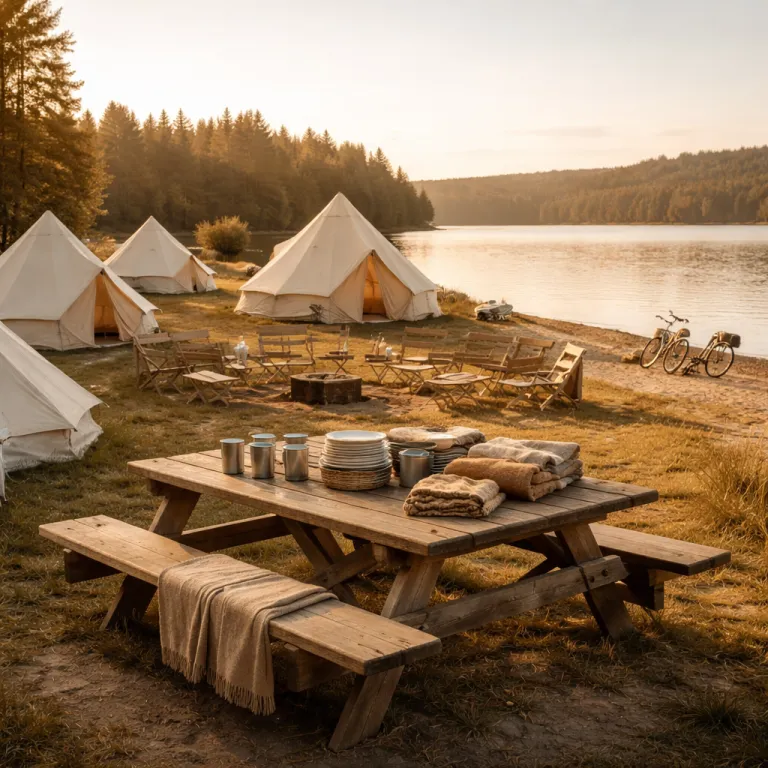
The campfire as the original social network
The camping connection travel trend is reshaping what luxury camping means. Premium outdoor stays are no longer about isolation on a distant ridge; instead, human connection now sits at the center of every trip, influencing how travelers choose campgrounds and how high-end bookings are made. For business leisure guests extending work trips, the fire ring has become as valuable as fast Wi-Fi.
When Campspot released its 2024 Outdoor Almanac and 2024 Camping Outlook, one data pattern quietly rewrote the playbook for high-end camping. Across these reports, which draw on survey responses from thousands of active campers in North America, Campspot notes that a large majority of travelers say their desire for connection will directly shape upcoming travel plans. In its 2026 Travel Trend Report, based on a sample of more than 1,500 respondents surveyed online in late 2025, Campspot reports that 82% of travelers say connection will influence their 2026 trips, and that single figure explains why elevated campgrounds are redesigning their outdoor spaces. In the same report, Campspot notes that nearly half of surveyed guests plan at least one group-focused camping getaway in 2026, underscoring how social design now influences inventory decisions. A "Together Trip" is defined in the report as a camping trip focused on connection and shared experiences, and that simple phrase now guides how luxury platforms curate inventory.
KOA has been tracking camping trends for years through its annual North American Camping and Outdoor Hospitality Report, and its data aligns with what Campspot sees in the field. Instead of booking solo camping trips purely to escape daily life, time campers now want to meet people, share meals and feel grounded in a real community. KOA’s recent datasets, which combine survey responses from tens of thousands of campers with booking data across multiple seasons, show continued growth in campers who say that spending time outdoors improves their mental health and reduces stress, reinforcing why social infrastructure matters. This shift is especially visible among executive travelers choosing to add two nights of camping after a week of meetings, using the great outdoors as a place to reset mental health rather than just to unplug from cell service.
For these travelers, the campfire is not nostalgia, it is infrastructure. A well-designed communal fire circle, with seating that encourages eye contact, can generate more meaningful connection than any networking event in a hotel ballroom. Luxury booking platforms now highlight which campgrounds offer hosted campfire talks, where campers interested in conversation can move from polite small talk to shared experiences that make people feel genuinely seen.
The most forward-thinking operators treat the campfire as social technology. They schedule gentle programming around it, such as guided stargazing or short storytelling sessions, so that travelers choosing to join have an easy reason to sit down. This approach respects campers who simply want to spend time in silence, while giving interested meeting-oriented guests a clear signal that meeting campers is part of the design, not an awkward accident.
For premium guests, the value lies in how these moments translate back into daily life. Executives who spend time in high-pressure work environments often report that a single night of camping, with phones tucked away and no cell service by choice, does more for their mental health than a week of passive resort time. In Campspot’s 2026 outlook, for example, a significant share of respondents cite stress relief and feeling grounded as primary reasons for booking outdoor stays. At one western campground featured in the report, for instance, community fire circles and shared outdoor kitchens helped drive a double-digit lift in average length of stay over two seasons. The camping connection travel trend is therefore not a soft lifestyle fad, but a structural response to how people feel in an era of constant digital noise.
From private plots to shared spaces: how design is changing
Walk a high-end campground aligned with the new travel trend and you will notice something immediately. The most desirable pitches are no longer the most isolated corners, but the sites that balance privacy with proximity to shared kitchens, communal fire pits and flexible event lawns. Luxury camping platforms now surface these design details prominently in their bookings interfaces, because they know people are actively searching for connection.
On Campsitestay, we see premium campgrounds using shared pavilions as the new lobby. Instead of a marble reception desk, there might be a timber-framed outdoor kitchen where campers interested in cooking together can prepare meals side by side. This is where travelers choosing to extend a business trip can meet people without forced icebreakers, simply by chopping vegetables or pouring wine at the same counter.
KOA properties that lean into this camping connection travel trend often cluster glamping tents, cabins and RV sites around a central green. Time campers can drift from their private decks into the community zone in under a minute, which makes spending time with others feel effortless rather than like a scheduled activity. When campgrounds design this way, they turn casual encounters into shared experiences that anchor the memory of the entire trip.
For luxury and premium booking websites, the work now is to translate these spatial qualities into clear digital language. A listing that once focused on square metres and thread count must now explain how the layout supports meeting campers and nurturing mental health. Guests want to read whether there is a quiet coworking yurt for remote work by day and a lively fire pit for socialising at night, because that mix lets them feel grounded while still keeping up with responsibilities.
Another subtle design shift concerns how campgrounds manage technology. Instead of promising blanket cell service, some high-end properties now map intentional low-signal zones where people feel permitted to unplug. These areas often sit near hammocks, forest bathing trails or riverside decks, giving campers interested in solitude a place to retreat before rejoining the community hub for evening camping trips programming.
Luxury operators that ignore this trend risk charging resort prices for a patch of grass with no social architecture. The camping connection travel trend rewards campgrounds that choreograph movement between private and shared spaces, allowing travelers to spend time alone, then step into the community when they are interested meeting others. In North America, this model is expanding quickly, while in some European regions with long-established caravan cultures, guests may still prioritise privacy first and social design second. For booking platforms, highlighting these design choices is no longer optional; it is the core of the value proposition.
Solo but social: why independent campers are driving the shift
The most surprising force behind the camping connection travel trend is not large family reunions. It is solo travelers, often on work trips or between meetings, who are quietly reshaping what premium camping looks like. These independent guests book through platforms like Campspot and KOA with a clear intention to be alone, yet they are also the ones most likely to join communal dinners or guided hikes.
Many of these travelers choosing solo stays are senior professionals who spend their days in structured corporate environments. They crave a kind of connection that is not mediated by job titles, performance reviews or meeting agendas, and camping offers that reset. When they arrive at thoughtfully designed campgrounds, they can move between reading alone in a hammock and joining a small group around the fire, which helps their mental health in ways that traditional business hotels rarely match.
For this audience, the ability to meet people on their own terms is crucial. They want to know that other campers interested in conversation will be present, without being forced into icebreaker games or loud events. Luxury booking websites now highlight programming such as sunrise coffee circles, guided trail runs or small-format tastings, because these formats make it easy for people to feel welcome while still protecting their autonomy.
Platforms like Campspot and KOA also report that solo guests are more likely to extend their stays. A traveler who initially books two nights may add a third once they have experienced how the community functions, especially if they are working remotely and can adjust their travel plans. This behaviour reinforces the business case for investing in shared spaces, since every extra night of spending time on site translates into higher revenue for campgrounds and surrounding communities.
There is also a clear mental health dimension to this pattern. Solo campers often arrive carrying the weight of daily life, from constant email to family obligations, and the great outdoors gives them a rare chance to feel grounded again. When they sit at a communal table and share stories with strangers, those shared experiences can recalibrate how they relate to work, relationships and even their own expectations of success.
For luxury and premium booking platforms, the lesson is simple but demanding. It is not enough to market silence and stars; the real value lies in curating communities where campers interested in connection can find each other naturally. As one Campspot guest quoted in the 2026 outlook puts it, "I came for the quiet, but I stayed an extra night for the people." When that happens, the camping connection travel trend stops being a marketing phrase and becomes the quiet reason why guests return to the same campgrounds year after year.
What business leaders can learn from campsite communities
Executives who treat camping as a side note to their travel rarely see its full strategic value. Those who engage with the camping connection travel trend, however, quickly realise that campgrounds function as living laboratories for community building. The way people organise themselves around a fire pit or a shared kitchen offers direct lessons for leading teams and designing workplaces.
At a well-run campsite, hierarchy dissolves the moment the kettle goes on. A CEO, a freelancer and a nurse may stand shoulder to shoulder at the outdoor sink, and the conversation flows without job titles. This flattening of status is one reason camping trips can be so restorative for mental health, and why people feel more open to new ideas when they return to work.
Business leaders can also study how camp hosts manage group dynamics. The best hosts read the energy of the group, introduce campers interested in similar activities and then step back, allowing organic connection to form. This is precisely the skill set required to lead hybrid teams, where managers must balance structure with autonomy and ensure that travelers choosing to work remotely still feel part of a cohesive community.
For luxury booking platforms, there is a parallel challenge. They must translate the subtle art of meeting campers into digital filters, photographs and copy that help travelers choosing connection orient their travel plans. Articles such as Campsitestay’s analysis of how campers became a quiet engine of the travel economy show that when people spend time in well-designed outdoor communities, their spending time patterns shift in favour of local businesses and longer stays.
The disconnection crisis is therefore not only a social issue, it is a market opportunity. Campgrounds that invest in communal infrastructure, thoughtful programming and clear communication about cell service policies will attract travelers choosing connection over isolation. Platforms like Campspot and KOA, which surface these details in their report-driven insights, are already shaping how premium guests allocate their bookings budgets.
For the executive reader, the most practical step is to treat your next camping trip as field research. Pay attention to how quickly you feel grounded when you arrive, how easily you meet people and how those shared experiences alter your sense of daily life once you return. The camping connection travel trend is not about nostalgia for childhood camping, it is about designing the next generation of communities where work, rest and the great outdoors coexist with intention.
Key figures behind the camping connection travel trend
- Campspot’s 2026 Outlook, based on an online survey of more than 1,500 active campers conducted in late 2025, reports that 82% of travelers say their desire for connection will directly shape their travel plans, confirming that community-focused camping is now a primary driver of bookings rather than a niche preference.
- Both Campspot and KOA identify the "Together Trip" as a defining camping trend, with group-oriented camping trips and multi-generational gatherings rising in parallel with solo but social travel, reshaping how campgrounds allocate space between private and communal areas.
- Industry analyses of camping and outdoor travel, including KOA’s North American Camping and Outdoor Hospitality Report, show consistent year-over-year growth in campers who prioritise mental health benefits, such as feeling grounded and reducing digital fatigue, which supports continued investment in shared spaces and low-tech experiences.